Bluegill Fishing Guide
Lepomis macrochirus
Family: Centrarchidae · Order: Perciformes
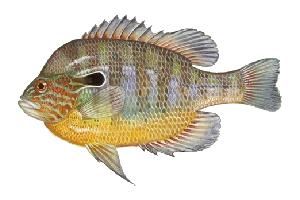
📖 About Bluegill
The bluegill is the most abundant and widely distributed sunfish in the United States, and the fish that introduces more children and beginners to angling than any other species. Despite their small size, bluegill are aggressive fighters on light tackle and provide year-round action. They are also excellent eating, with sweet, white meat.
💡 Fun Fact: Male bluegill build and guard circular nests in colonies called "beds," and will attack fish many times their size to protect their eggs.
🏆 World Record Bluegill
🌡️ Water Temperature Range
🌿 Habitat & Behavior
Extremely adaptable — found in ponds, lakes, reservoirs, and slow-moving rivers. Prefers weedy, shallow water but found throughout the water column in summer.
🍖 Diet & Feeding Behavior
Insectivores feeding on worms, insects, small crustaceans, zooplankton, and small fish. Will hit almost any small offering.
🎣 How to Catch Bluegill
Simple light tackle fishing with worms under a bobber is classic. Fly fishing with small dry flies or poppers is incredibly fun. Target spawning beds in shallow water (2-6 feet) in late spring to early summer. Use 2-6 lb test line for best action.
Best Baits & Lures
📡 Current Bite Forecast — Summer 2026
Based on seasonal patterns, optimal temperature range (65.0–80.0°F), and Bluegill behavior data. Updated monthly.
📅 Monthly Fishing Calendar — Bluegill
When to target Bluegill throughout the year based on spawning cycles, temperature preferences, and feeding behavior.
🎯 Expert Techniques for Bluegill
🪝 Crickets
Live crickets are a favorite bluegill and sunfish bait. Hook them through the thorax and fish under a small quill float in 2–5 feet of water near aquatic vegetation.
🪝 Small Jigs
Small 1/32 to 1/16 oz tube jigs and curly-tail grubs are extremely versatile. Cast near structure and let the jig slowly flutter down — most strikes occur on the fall. Use light 4–6 lb fluorocarbon for the clearest water.
⚖️ Bluegill Fishing Regulations by State
The following are general guidelines. Always verify current regulations with your state Fish & Wildlife agency before fishing. Regulations change annually.
| State | Min. Size | Daily Bag Limit | Season | License Required |
|---|---|---|---|---|
| Alabama | 8" | 25 fish | Year-round | Yes — Check Alabama regs → |
| Arizona | 9" | 30 fish | Year-round | Yes — Check Arizona regs → |
| Arkansas | 10" | 15 fish | Year-round | Yes — Check Arkansas regs → |
| California | None | 25 fish | Year-round | Yes — Check California regs → |
| Colorado | 8" | 20 fish | Year-round | Yes — Check Colorado regs → |
| Connecticut | None | Unlimited fish | Year-round | Yes — Check Connecticut regs → |
| Delaware | 9" | 25 fish | Year-round | Yes — Check Delaware regs → |
| Florida | 8" | 25 fish | Year-round | Yes — Check Florida regs → |
| Georgia | 9" | 30 fish | Year-round | Yes — Check Georgia regs → |
| Hawaii | 10" | 15 fish | Year-round | Yes — Check Hawaii regs → |
| Illinois | None | 25 fish | Year-round | Yes — Check Illinois regs → |
| Indiana | 8" | 20 fish | Year-round | Yes — Check Indiana regs → |
| Iowa | None | Unlimited fish | Year-round | Yes — Check Iowa regs → |
| Kansas | 9" | 25 fish | Year-round | Yes — Check Kansas regs → |
| Kentucky | 8" | 25 fish | Year-round | Yes — Check Kentucky regs → |
| Louisiana | 9" | 30 fish | Year-round | Yes — Check Louisiana regs → |
| Maine | 10" | 15 fish | Year-round | Yes — Check Maine regs → |
| Maryland | None | 25 fish | Year-round | Yes — Check Maryland regs → |
| Massachusetts | 8" | 20 fish | Year-round | Yes — Check Massachusetts regs → |
| Michigan | None | Unlimited fish | Year-round | Yes — Check Michigan regs → |
| Minnesota | 9" | 25 fish | Year-round | Yes — Check Minnesota regs → |
| Mississippi | 8" | 25 fish | Year-round | Yes — Check Mississippi regs → |
| Missouri | 9" | 30 fish | Year-round | Yes — Check Missouri regs → |
| Nebraska | 10" | 15 fish | Year-round | Yes — Check Nebraska regs → |
| Nevada | None | 25 fish | Year-round | Yes — Check Nevada regs → |
| New Hampshire | 8" | 20 fish | Year-round | Yes — Check New Hampshire regs → |
| New Jersey | None | Unlimited fish | Year-round | Yes — Check New Jersey regs → |
| New Mexico | 9" | 25 fish | Year-round | Yes — Check New Mexico regs → |
| New York | 8" | 25 fish | Year-round | Yes — Check New York regs → |
| North Carolina | 9" | 30 fish | Year-round | Yes — Check North Carolina regs → |
| North Dakota | 10" | 15 fish | Year-round | Yes — Check North Dakota regs → |
| Ohio | None | 25 fish | Year-round | Yes — Check Ohio regs → |
| Oklahoma | 8" | 20 fish | Year-round | Yes — Check Oklahoma regs → |
| Oregon | None | Unlimited fish | Year-round | Yes — Check Oregon regs → |
| Pennsylvania | 9" | 25 fish | Year-round | Yes — Check Pennsylvania regs → |
| Rhode Island | 8" | 25 fish | Year-round | Yes — Check Rhode Island regs → |
| South Carolina | 9" | 30 fish | Year-round | Yes — Check South Carolina regs → |
| South Dakota | 10" | 15 fish | Year-round | Yes — Check South Dakota regs → |
| Tennessee | None | 25 fish | Year-round | Yes — Check Tennessee regs → |
| Texas | 8" | 20 fish | Year-round | Yes — Check Texas regs → |
| Utah | None | Unlimited fish | Year-round | Yes — Check Utah regs → |
| Vermont | 9" | 25 fish | Year-round | Yes — Check Vermont regs → |
| Virginia | 8" | 25 fish | Year-round | Yes — Check Virginia regs → |
| Washington | 9" | 30 fish | Year-round | Yes — Check Washington regs → |
| West Virginia | 10" | 15 fish | Year-round | Yes — Check West Virginia regs → |
| Wisconsin | None | 25 fish | Year-round | Yes — Check Wisconsin regs → |
| Wyoming | 8" | 20 fish | Year-round | Yes — Check Wyoming regs → |
⚠️ Disclaimer: Regulations listed are for general reference only. Verify all regulations with your state agency before fishing.
🗺️ Waters Currently at Bluegill Optimal Temperatures
🌡️ Water bodies with temperatures in the optimal range for Bluegill (65.0–80.0°F). Data from USGS sensors, updated daily.
❓ Frequently Asked Questions
What is the best bait for Bluegill?
What water temperature do Bluegill prefer?
What is the world record Bluegill?
What do Bluegill eat?
What is the best season for Bluegill fishing?
What are the fishing regulations for Bluegill?
What depth do Bluegill live at?
Caught a Bluegill? Share Your Report!
Help fellow anglers by sharing your catch details, conditions, and tips.
🎣 Submit a Fishing Report →📊 Species Summary
- Scientific NameLepomis macrochirus
- FamilyCentrarchidae
- Size4.0–12.0 inches
- Max Weight4.50 lbs
- Optimal Temp65.0–80.0°F
- Lifespan5-8 years
- StatusLeast Concern
- World Record4.75 lbs
📍 States Where Found
Found in 47 US states